Project Management in the Old Testament

The Old Testament book of Nehemiah tells the story of God’s faithfulness to His people as they worked to rebuild the walls of Jerusalem. It is a story of prayer, courage, opposition, and renewed commitment to God. It also offers practical lessons about leadership and managing difficult work.

As someone who has spent years working in project management and business analysis, I find Nehemiah especially interesting. I recognize many practices in his actions that still help us plan and complete projects today. Yet we must be careful not to force modern project management terminology onto Scripture. Nehemiah did not set out to write a management handbook. His account first points us to the Lord, who guided and sustained His people.

Understanding the Need
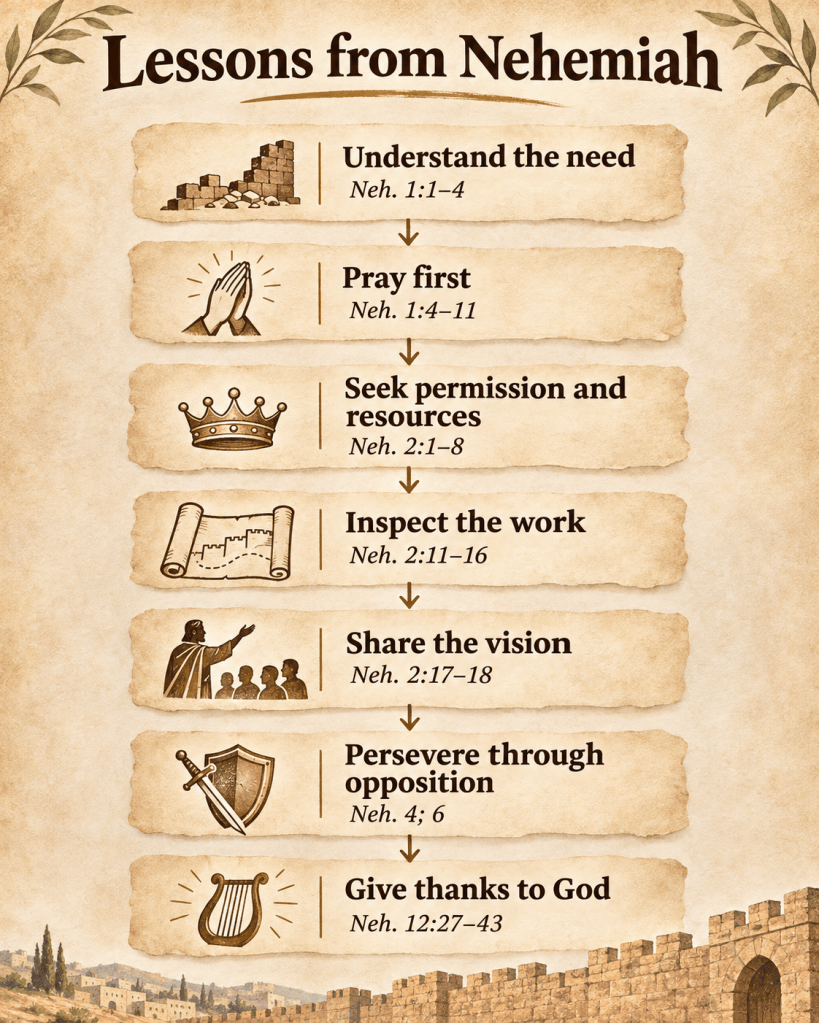
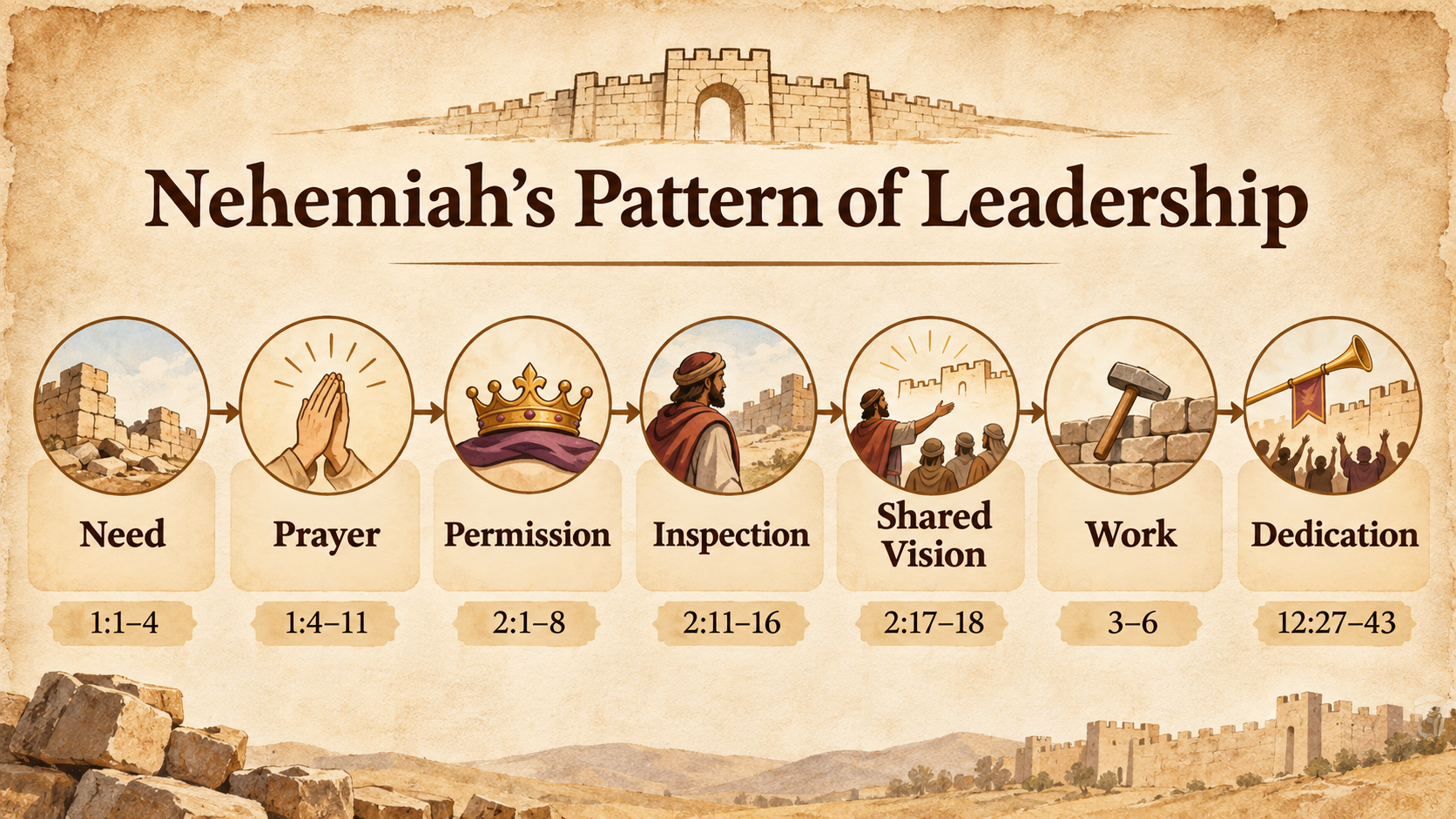
Seven lessons from Nehemiah: understand the need, pray, seek resources, inspect the work, share the vision, persevere through opposition, and give thanks to God.

After the exile in Babylon, some Jewish people returned to their homeland. The temple had been rebuilt, but Jerusalem’s walls remained broken and its gates burned. When Hanani and others brought Nehemiah news of the people’s trouble and shame, he understood the seriousness of their situation (Nehemiah 1:1–3).

In project management, we often begin with a problem or need. Before choosing a solution, we should understand what is wrong, whom it affects, and why action matters. Nehemiah listened carefully to the report. But his first response was not to draw up a schedule. He mourned, fasted, confessed sin, and prayed to the God of heaven (Nehemiah 1:4–11).

That order matters. Nehemiah’s concern for Jerusalem grew from love for God and His people, not merely from a desire to complete a construction project.

Seeking Authority and Resources

Nehemiah served as cupbearer to King Artaxerxes. When the king noticed his sadness and asked what he wanted, Nehemiah prayed and then requested permission to go to Jerusalem to rebuild the city (Nehemiah 2:1–5). The king asked how long he would be gone, and Nehemiah gave him a time. Nehemiah also requested letters for safe passage and timber for the work (Nehemiah 2:6–8).

These details remind me of a project charter: agreement on the purpose of the work, permission to proceed, and access to the resources needed. Scripture does not call the letters a charter, but the comparison is useful. Nehemiah did not assume that good intentions were enough. He sought the authorization and practical support needed to carry out the work.

He also recognized the ultimate source of that help. Nehemiah wrote that the king granted his requests because God’s good hand was upon him (Nehemiah 2:8).

Examining the Work Before Beginning
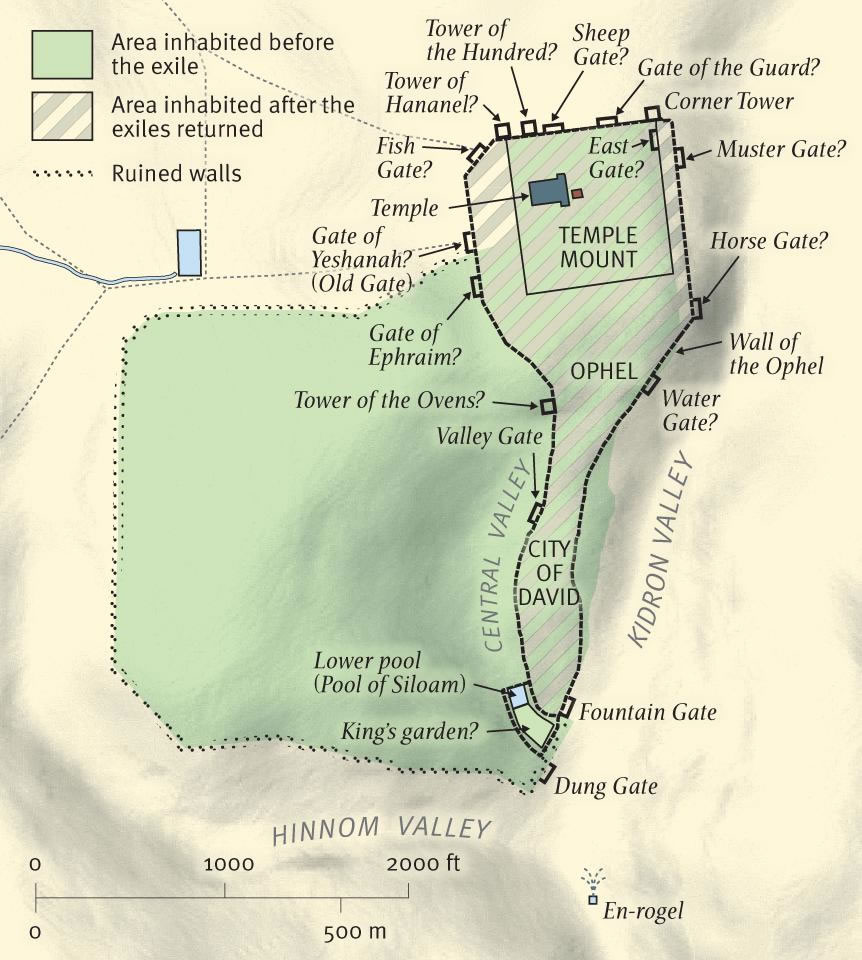
Historical map included in the original draft

After arriving in Jerusalem, Nehemiah did not immediately gather a crowd and start rebuilding. He went out at night with a few men to inspect the damaged walls and gates (Nehemiah 2:11–16). He saw the situation for himself before presenting the work to the people.
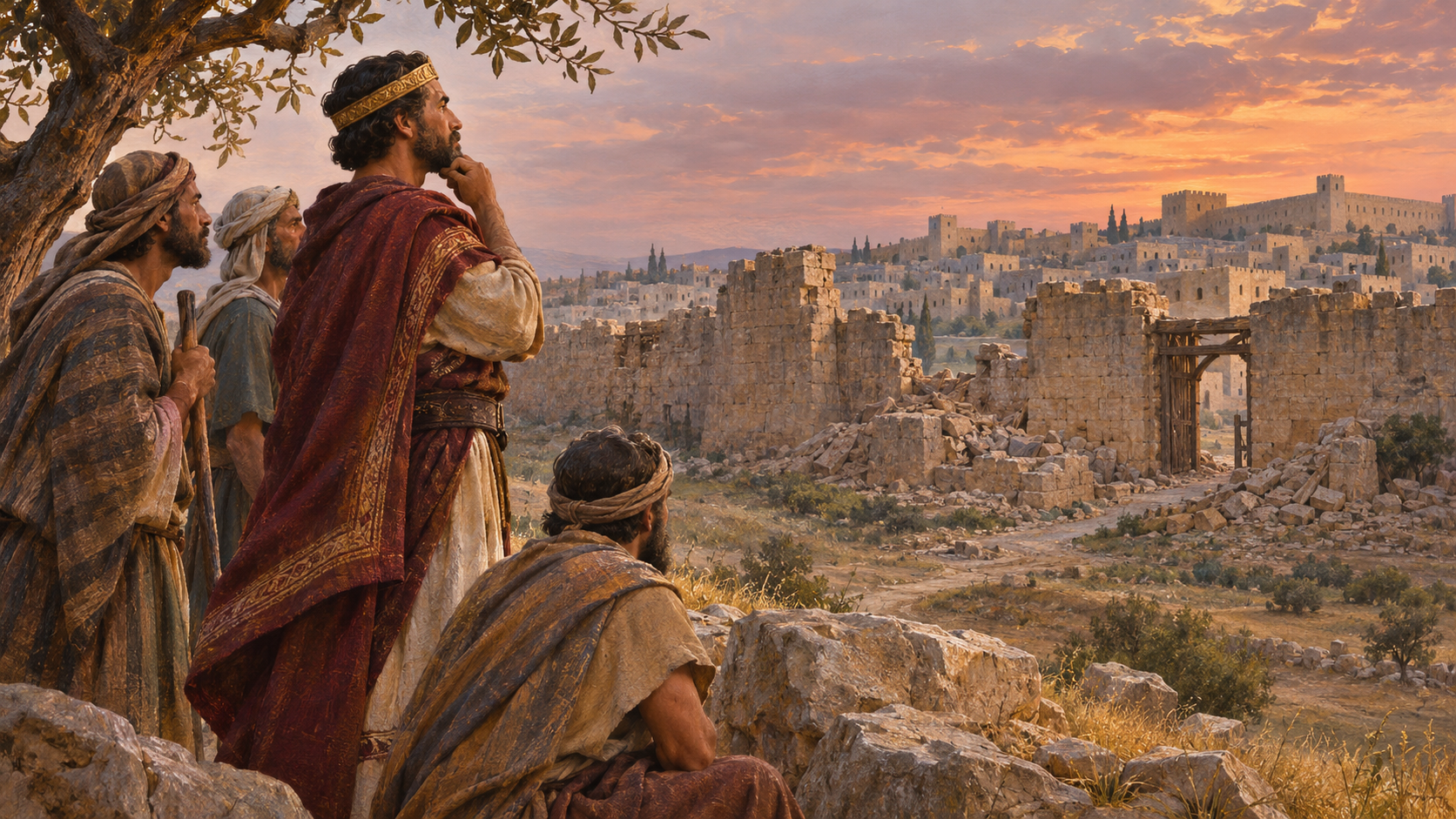
This is a valuable lesson in defining the scope of a project. Reports can alert us to a need, but careful observation helps us understand the actual conditions. Nehemiah’s inspection is a biblical example of gathering firsthand information before asking others to act.

Sharing the Vision

Nehemiah then spoke to the people about Jerusalem’s condition and urged them to rebuild. He told them how God had helped him and how the king had responded. The people agreed to begin the work (Nehemiah 2:17–18).

Successful projects require more than a leader’s private plan. People need to understand the purpose of their work and be willing to take part in it. Nehemiah explained both the need and the reason for hope. The task was shared, not carried by one person alone.

Dividing the Work

Nehemiah 3 describes the rebuilding of specific gates and sections of wall by priests, families, craftsmen, and others. Different groups took responsibility for different portions of the work. Some repaired sections near their own homes.

Today we might describe this as breaking a large project into manageable pieces and assigning responsibility. Each section mattered because each contributed to the completed wall. The account also reminds us that effective work depends on people with different backgrounds working toward a common purpose.

Responding to Opposition and Risk

The rebuilding did not proceed without opposition. Sanballat, Tobiah, and others mocked the workers, threatened them, and tried to disrupt the work (Nehemiah 4; 6). The people became weary, and the danger was real.

Nehemiah responded with prayer and practical precautions. Guards were posted, workers were organized for defense, and some carried weapons while they worked. Nehemiah encouraged the people to remember the Lord and to protect their families (Nehemiah 4:9, 13–23).

Modern project managers call this risk management: identifying threats and adjusting plans to meet them. Nehemiah’s response teaches something more. Planning and prayer were not competing activities. The people trusted God while taking responsible action.

Nehemiah also refused distractions meant to pull him away from the work. When opponents repeatedly invited him to a meeting, he would not abandon his responsibilities (Nehemiah 6:1–4). Good leaders must sometimes say no to remain faithful to the task entrusted to them.

Completing the Work—and Remembering Its Purpose

The wall was completed in fifty-two days (Nehemiah 6:15). This was a remarkable accomplishment, but Nehemiah did not present it as proof of his personal greatness. Even Israel’s enemies recognized that the work had been accomplished with God’s help (Nehemiah 6:16).

The story does not end with the finished wall. Nehemiah 8 describes the public reading of God’s Law, and later chapters tell of confession, covenant renewal, dedication, and reform. The wall mattered, but the deeper concern was a people living faithfully before God. At the dedication, the people celebrated with thanksgiving and joy (Nehemiah 12:27–43).

This is an important reminder for anyone responsible for a project. Finishing the work is not the same as fulfilling its larger purpose. We need to ask whether the work has genuinely served the people and mission for which it was undertaken.
The Greatest Lesson

I see several project management practices reflected in Nehemiah’s account: understanding a problem, seeking approval and resources, assessing conditions, sharing a vision, dividing the work, responding to risks, and recognizing completion. These are useful comparisons, but they are not the book’s central message.

Nehemiah consistently turned to God. He prayed when he first heard the troubling news. He prayed before speaking to the king. He prayed when enemies threatened the work. And when the wall was finished, the people gave thanks to the Lord.

We can plan carefully, communicate clearly, and work diligently. We should do all of those things. But Nehemiah teaches us not to confuse our plans with God’s purposes or our abilities with His grace. Whatever work God places before us, we should approach it with prayer, humility, faithful effort, and gratitude.

That may be the most important project management lesson we can learn from Nehemiah.

Engaging in Mission Work in the Reformed Tradition

This article reflects the importance of mission work within the Reformed tradition. As followers of Christ, we are called to reach out and make a difference in the world, sharing the transforming love of God with others. Let us explore three key points that highlight the significance of mission work in the Reformed tradition.

Engaging in mission work within the Reformed tradition means actively sharing the Gospel of Jesus Christ with those who haven’t heard it, with a strong emphasis on establishing new, self-sustaining Reformed churches by prioritizing the preaching of the Bible, sound doctrine, and the centrality of the local church, all grounded in the belief of God’s sovereign grace in salvation; essentially, “mission from the church, by the church, and to the church.”

Point 1: Understanding the Sovereignty of God’s Mission

In the Reformed tradition (aka Kuyperian philosophy), we affirm God’s sovereignty in all things, including mission work. Our mission efforts are not solely human endeavors; they actively participate in God’s mission to reconcile and restore all creation to Himself. As we engage in mission work, we recognize that God initiates, sustains, and brings about transformation through His Spirit. We must faithfully respond to God’s call, trusting His power and guidance.

Point 2: Embracing the Reformed Theological Emphasis on Grace

The Reformed theology strongly emphasizes God’s grace, highlighting His undeserved favor and love for humanity. In our mission work, we are called to embody this grace and extend it to everyone we encounter. Recognizing that salvation is a gift freely given by God, we approach mission work with humility, knowing that we are simply vessels through which His grace flows. We share the Gospel message not as a means of coercion or judgment but as an invitation to experience the transformative power of God’s love.

Point 3: Nurturing Community and Justice in Mission Work

In the Reformed tradition, community and justice are essential for mission work. We recognize that God’s mission includes the salvation of individuals and the transformation of societies and systems. Engaging in mission work allows us to address the social, economic, and political injustices that hinder the flourishing of God’s creation. Through acts of compassion, advocacy, and service, we work towards building communities characterized by love, justice, and mercy.

Conclusion:

Remember that mission work in the Reformed tradition is not an optional activity but a vital expression of our faith. It is an opportunity to participate in God’s mission, extend His grace to others, and work towards creating communities marked by justice and love. May we embrace this calling, knowing God empowers and accompanies us every step. Let us go forth, equipped by the Holy Spirit, and make a lasting impact on those around us. Amen.

Innovation and Artificial Intelligence

History shows that new ideas are often judged first through the lens of existing authority, doctrine, and social order. Some ideas later regarded as important were initially resisted, restricted, or condemned by religious and political authorities. The record is mixed, however: churches sometimes opposed change, sometimes supported it, and often disagreed internally about how to respond.


Scientific and Cosmological Ideas:
Galileo’s support of heliocentrism led to his 1633 trial before the Roman Inquisition. He was judged vehemently suspected of heresy and sentenced to imprisonment, later commuted to house arrest. Giordano Bruno, who taught an infinite universe and many worlds, was executed for heresy in 1600, though historians debate how much his cosmology, rather than his broader theological views, contributed to his condemnation.


Theological and Philosophical Concepts:
Early Christians fiercely debated how to describe the relationship between the Father and the Son. At Nicaea in 325, the council condemned Arianism, which taught that Christ was a created being rather than equal in divine nature with the Father.


Translation and Literacy:
Bible translation into vernacular languages was sometimes treated as dangerous, especially when associated with reform movements or unauthorized teaching. John Wycliffe’s 14th-century English Bible tradition was condemned, and William Tyndale was executed in 1536 after translating the New Testament and parts of the Old Testament into English.


Reform Movements:
Many ideas that later became mainstream Protestant doctrine were initially branded as heretical, including justification by faith alone, the priesthood of all believers, and challenges to papal authority.


These examples illustrate how institutions may resist changes they believe threaten truth, order, authority, or deeply held worldviews, even when later generations judge some of those changes differently.

The printing press wasn’t universally condemned as “evil,” but it did face significant suspicion and resistance from various authorities, including church officials, for several reasons:


Church Concerns:
Many clergy worried about losing control over religious texts and doctrine. The ability to mass-produce books meant that “heretical” or unauthorized religious writings could spread rapidly. Some church authorities feared that widespread access to religious texts would lead to misinterpretation and undermine clerical authority. The printing of indulgences also became controversial, particularly as it enabled the mass production that reformers like Martin Luther criticized.


Secular Authority Fears:
Political rulers were concerned about the spread of seditious materials and ideas that could challenge their authority. The printing press made it much harder to control the flow of information, which worried those in power.


Economic Disruption:
Scribes and manuscript copyists saw their livelihoods threatened by this new technology. Some guilds and established book producers initially resisted the innovation.


Quality Concerns:
Some scholars and clergy argued that printed books were inferior to hand-copied manuscripts, both in terms of accuracy and spiritual value. There was a belief that the careful, meditative process of hand-copying was itself spiritually beneficial. However, many embraced it.

The lesson is not simply that religious institutions oppose progress. The history is more complicated than that. New ideas can spread fear as well as hope, and authorities often respond according to what they believe is at stake: truth, order, influence, or public trust. The printing press is a good example. It was not simply rejected; it was embraced, regulated, feared, and used by the very institutions it disrupted.

Grace

  • Saving 
  • Sustaining
  • Sanctifying

In Christian theology, different types of grace are often distinguished based on their specific functions and effects on the life of a believer. The three primary types of grace commonly discussed are saving grace, sustaining grace, and sanctifying grace. Let’s explore the differences between them:

  1. Saving Grace:
    • Saving grace refers to the initial grace that leads to a person’s salvation and justification before God. It is the grace that brings about a person’s conversion and entry into a relationship with God through faith in Jesus Christ.
    • This grace is often associated with the moment of repentance and acceptance of Jesus as Lord and Savior. It is a transformative grace that forgives sins, redeems the individual, and reconciles them with God, thereby securing their eternal salvation.
    • In Protestant theology, this concept is closely related to the doctrine of justification by faith, which emphasizes that salvation is a free gift from God received through faith, not by human works or merits.
  2. Sustaining Grace:
    • Sustaining grace, also known as persevering or continuing grace, refers to God’s ongoing support, empowerment, and guidance to believers after their initial salvation. It is the grace that sustains and strengthens believers throughout their Christian journey.
    • This type of grace enables believers to endure trials, overcome temptations, and remain steadfast in their faith. It assists them in living a life that is pleasing to God and aligned with His will.
    • Sustaining grace is essential in helping Christians grow in their faith, overcome obstacles, and bear spiritual fruit. It is an ever-present grace that keeps believers connected to God and empowers them to live a life of holiness.
  3. Sanctifying Grace:
    • Sanctifying grace, also known as transformative grace or progressive grace, is the grace that works within believers to make them more Christ-like and holy over time.
    • This grace builds upon saving grace and is associated with the process of sanctification. It is the ongoing work of the Holy Spirit within believers, gradually transforming them into the image of Christ and conforming them to God’s moral and spiritual standards.
    • Sanctifying grace involves the believer cooperating with God’s work through disciplines like prayer, studying Scripture, and engaging in acts of service and love. Through this cooperation, believers grow in virtues and spiritual maturity.
    • While saving grace justifies the believer before God, sanctifying grace involves the ongoing purification and renewal of the believer’s heart, mind, and character.

In summary, saving grace brings about initial salvation and justification, sustaining grace supports and empowers believers in their Christian journey, and sanctifying grace works within believers to make them more Christ-like and holy as they grow in their faith. All three forms of grace play crucial roles in the believer’s relationship with God and their journey of spiritual growth.

Behind the Scenes Look at Wycliffe USA

Ellie and I are excited to be a part of Wycliffe USA. We have the opportunity to work with some wonderful, God-fearing people who have a heart for Bible translation and being obedient to Christ’s command of the Great Commission. I hope you will enjoy this 4 minute and 14 second video talking a bit about what we do at Wycliffe. You might even notice where the top of my head makes a cameo (only two seconds and JUST the top).

The Kelikos

We were filled with laughter, and we sang for joy. And the other nations said, “What amazing things the Lord has done for them.” Yes, the Lord has done amazing things for us! What joy!

Psalm 126:2-3 (NLT)

Many of you are our partners with our Wycliffe Bible Translators ministry. As our partners, you share in the faithfulness to people groups around the world. Because of God’s providence this past year, we rejoice with 57 communities who received scripture in their language.

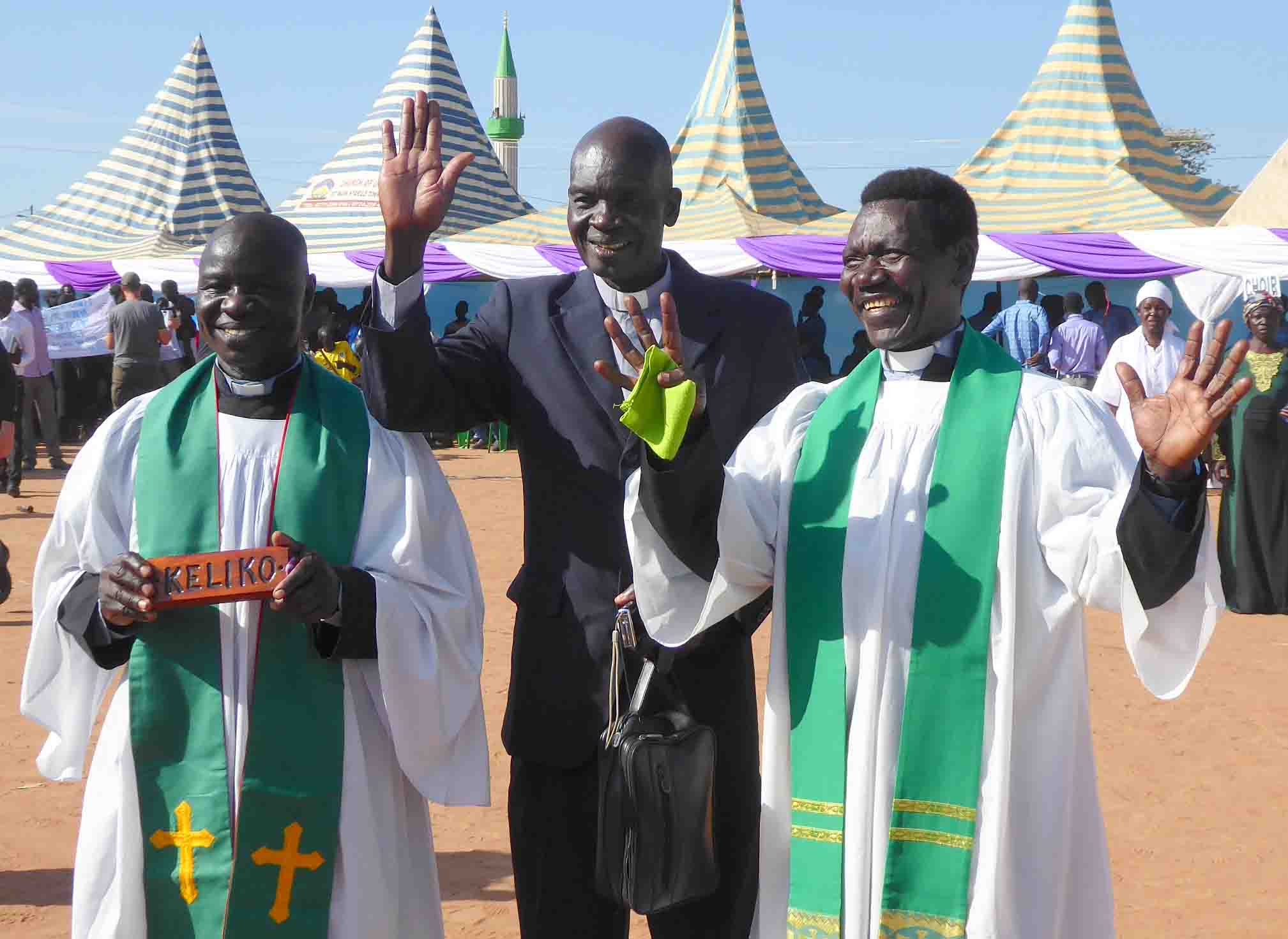
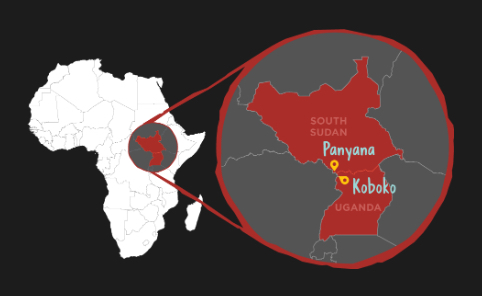
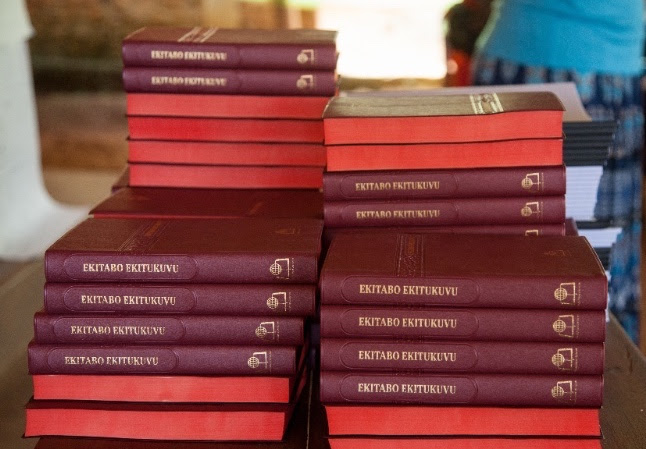
Communities like the Keliko people of South Sudan who recently dedicated their New Testament. By God’s grace, the Keliko persevered through 30 years of trials and displacements from their home country. They persistently kept their eyes fixed on the hope of holding God’s world in their hands someday.

Translators and pastors Ezekiah Dada, Isaac Kenyi and Enos Dada celebrate the completed Keliko New Testament. Photo: April Haberger

The Keliko New Testament is the 1000th New Testament completed with the engagement of Wycliffe USA and our major partner, SIL International. The first 500 took 57 years to complete. But the second 500 took just 17 years. As the work of clear, accurate and natural Bible translation progresses faster than ever, we continue to rely on key partnerships with SIL, the Seed Company, the Jesus Film Project, Faith Comes by Hearing, Deaf Bible Society, YouVersion and many more, to bring the hope and healing of God’s word to every people group.

The Keliko

Complimenting partnerships is technology which continues to positively shape the face of Bible translation. Because of advances in technology, we’ve been able to identify more people groups in need of translation. Many of these are sign languages. We’ve seen that when communities learn that God can speak to them in their language, that people discover their value to Him and are eager to begin translation work.

As we reflect on God’s goodness in 2018, our hearts and minds turn toward people still waiting to get the good news. We anticipate the day when every person will have access to the scripture in a language and a form that clearly speaks to their heart so they can proclaim with the Psalmist David, “How sweet your words taste to me. They are sweeter than honey.”

Thank you for being a part of this life changing work.

Thank you for being a part of this life changing work.

Much of the information from this BLOG is at least in part, from a Wycliffe Bible Translators USA

Business Analysis: Lessons from Fables

In another article, I talked a little bit about my career path leading to the role of “missionary”. One of my more recent categories of professional work has been in project management and business analysis. An aspect of both of these roles is to produce something that is new or unique within a certain time frame. Key to doing this well is to know what “customer” wants. So a very important first step in creating something new is to figure that out.

Gathering and documenting requirements is a crucial aspect of any project. Unfortunately, in business analysis and project management, we can fall victim to the trap of assumptions. This is not only for someone lacking experience. Even the most seasoned of professionals can fall prey to this error in omission and can be one of the weakest links in developing a project.

The difficulty can be attributed to a number of reasons. It is an aspect of planning. The time that it takes to effectively gather requirements can feel like unproductive time. Business analysts are not alway trained in art and science of requirements.

But I must say that the blame does not solely rest on the business analyst. Frequently it is the customer who has a challenging time articulating precisely and clearly what their needs are.

And finally, there seems to be a persistent problem with users and business analysts jumping to a solution rather than keenly describing and analyzing what the needs are. It is our human nature to want to jump right to the solution. This may lead to something that I call “Ready, Fire, Aim”. Understanding the problem to its fullest extent reveals a greater part of the ultimate solution.

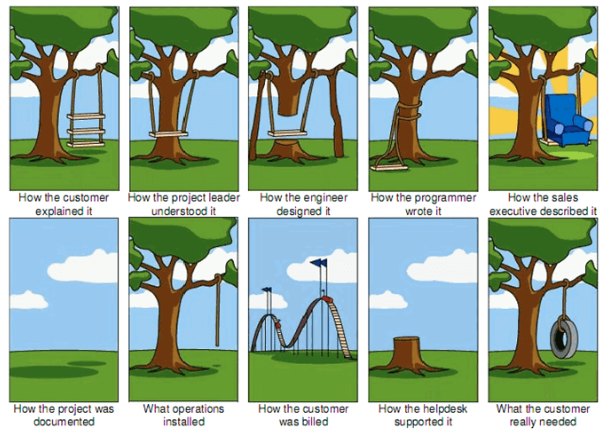
By skipping this part of the problem solving, our solutions are not what typically solves to root cause of our problems. The graphic below is a classic representation of what a poor description, or (and more frequently) poor understanding of that the requirements are. 

Source: ProjectCartoon.com

On a trip home from the emergency room in another city where one of our granddaughters was having undigested coins removed, there was a bright, full moon off to our left. Thinking of our princess and seeing the bright orb in the sky, I was reminded of a story that my second grade teacher read to the class one day. It terms that even a child can understand, the story reflects the additional costs, features and compounded problems that we add to our ‘solution’ when we fail to find out what the end user truly wants. The following is a paraphrased version of the classic tale by James Thurber called ManyMoons.

The king called for the Lord High Chamberlain, the Royal Wizard, and the Royal Mathematician who all quickly came into the throneroom. The king explained the dilemma, then asked, “Tell me about the moon and how can we get it for Princess Lenore.”
 
“The moon, sire,” replied the Lord High Chamberlain, “is three miles above the earth, is as large as the princess’s room, and made of green cheese.”
 
Unhappy with the reply, the king turned to the Royal Wizard for counsel. “My daughter wants the moon. Please get it down for her.” This proved to be more disheartening since by the wizard’s estimation the moon was 25,000 miles above the earth, was as large as the entire castle, and made of purest silver.
 
Finally, the king turned to the Royal Mathematician to hopefully get a more realistic description and more promising results. “Sire,”said the Royal Mathematician, “the moon is 50,000 miles above the earth, is as large as the entire kingdom, and is painted to the sky.
 
The King, exasperated, sent the three on their way and called for the court jester. He asked the jester to play a dirge on his lute since he was so terribly sad that he could not get the moon for his daughter and she was, therefore, seemingly incurable. The court jester begged, “Let me talk with her, Sire.”

He told the Princess her bedtime story and looking out of the window together he asked, “Tell me about the moon?” The princess explained that the moon was about the size of her thumb nail since she could hold out her thumb and just cover the whole moon with her thumbnail. It wasn’t any higher than the tree outside her window since it often got caught there just before she fell asleep. And then she further explained that the beauty of the moon was because it was made from pure gold.

The jester went to the court jeweler and asked him to fashion a piece of gold into an orb, slightly smaller than Princess Lenore’s thumb nail and to fasten it to a golden chain. The next morning when the princess awoke,her father, the king, presented her with the pendant. Lenore’s heart leapt for joy. By the time she finished her breakfast, she wanted to get dressed and play outside. She was once again well.

James Thurber Many Moons

Commissioning

On Sunday, January 27, 2019, Shalom Christian Reformed Church in Sioux Falls, South Dakota commissioned us for our ministry in God’s Kingdom. 

Wycliffe and Resonate Global Mission both see it vital that missionaries be commissioned by their home church. This action clearly says that the missionaries are not on their own — they are called by God and sent as agents of the Church. Missionaries are an extension of the congregation’s ministry (Acts 13:3).

By commissioning, inspiration is provided for how God is working in the church and in the world: young adults who are wondering if this is also their calling, older folks who may not feel the call to go but can send and engage in ministry right where they are, and pastors who remember their own ordinations through this ceremony and are inspired again toward the work of ministry. This connects the work of God in the congregation to God’s calling in our hearts and God’s work in the world.

It was so incredibly humbling to have friends, family and the Shalom congregation there to support and send us into our ministry. Their personal affirmation was a blessing and for which we are so grateful.

As a part of the process, we were asked a series of questions. Those questions as well as our answers are listed below.

How have you experienced His call into missions?

  • We have felt God’s calling for some time and
    Shalom has played a significant part of that call. Through a blending of His
    Word and the Holy Spirit we have heard His call. Through prayer we have been strengthened.
    We have been encouraged from family and friends with deeply rooted faith. Through
    a sermon right here, we heard strong affirmation of our call. And finally,
    through the overwhelming conviction from the Holy Spirit to be obedient to the
    call.

What is the task you are being called to?

  • We will be working for Wycliffe Bible Translators and in partnership with Resonate Global Mission. Our functions will be in Strategic Workforce Planning, project management and donor relations.

Where will you be serving?

  • Primarily out of our home office in Woodbury, with several international and domestic trips each year to establish and maintain relationships with partner organizations. Most international travel will be to various parts of the African continent.

How will our partnership give glory to God and extend His Kingdom?

  • Glory goes to God when we are obedient to the
    Great Commission. Some he calls to go. Some he calls to send. With our focus on
    the continent of Africa where there are 706 languages waiting for Bible
    translation, your partnership will help deliver Bibles to them and lives will
    be transformed.

Back From Africa!

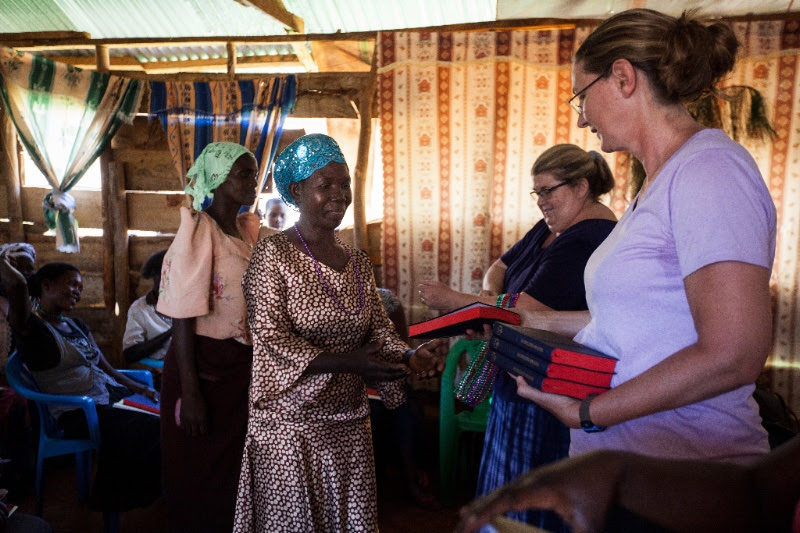
From November 4 to 19, I had the privilege of being called to Africa to help out with conferences for women in Tanzania and Zambia with Lydia Circle Ministries.  The conferences were to train women in spiritual discipleship and evangelism. The experience was one that I will never forget.

The first conference was in Tabora, Tanzania. Several women were patiently waiting for our arrival which was delayed by a few days while we waited for connecting flights. When we finally got to our destination, we were greeted with shouts of joy, singing, dancing and many hugs. A wrap was affectionately put on my head and we were presented with flowers as a welcome gift.

The women were all hungry for the training in Spiritual Discipleship and Evangelism that we were there to provide as part of the Lydia Circle Ministries. The praise and worship were genuine, real. Despite their lack of material things, they were grateful for their salvation and their relationship with their redeemer.

Even though I was a stranger, they took me in. Despite having little in terms of material things, they showered me in love. When they presented us with jars of honey, tears streaked my face as I thought about the value to them.

I loved to see how the women both in Tanzania and Zambia worshipped. Weather in joyful singing and dance or on all fours weeping and crying out to the Lord, they were real and sincere.

Teaching Me a Lesson in “Liturgical Dance” 

They loved taking pictures together, holding their babies and teaching me how to dance. They loved saying hallelujah, amen! They loved reading the Bible. I realized because of Christ their hearts were full of love despite the poverty and their living conditions. It has been a privilege to go to Africa. I was truly blessed.

Singing a Praise Song During Worship

Ellie Goes to Africa!

by Ellie Sikma

Sometimes God seems to have a sense of humor. When I would go on walks with my friend in Sioux Falls, we would often talk about how we wanted God to use us. We wanted so very much to serve the Lord. But there was one thing that we figured we did NOT want to do. That was going to Africa in order to serve him.

So as we fast forward a number of years, we see yet another significant revelation of God’s plan for my life. This one came by way of a friend of mine, Melinda Dykstra, who is the founder of Lydia Circle Ministries. She asked me to accompany her to Tanzania and Zambia for a conference from November 4 to 19 to train women in spiritual discipleship and evangelism.

LydiaCircle02

While we were members of the same church many years ago, we have had very little contact over the years. So it was quite a surprise to hear from her now after all of these years. In my mind, my first response was “NOOOO!”. But when I found out that it was in her prayers that my name came to her, I knew that it was something that I needed to do.

LydiaCircle01

So as part of my preparation for our mission to Tanzania and Zambia, I put a portion of Ephesians 3 into a prayer. Please pray this prayer with me while I prepare and while we are gone.

Dear Lord. As I prepare for this mission trip, I pray that you empower me with your wisdom, love, and grace. Use my hands and feet to touch the hearts and lives of women in Zambia and Tanzania in such a way that they may experience your presence. May they hear you whisper their name, calling them to repentance. And may they grasp how wide and long and high and deep is the love of Christ and to know this love that surpasses knowledge, that they may be filled to the measure of all the fullness of God. In our Savior’s precious name. Amen