History shows that new ideas are often judged first through the lens of existing authority, doctrine, and social order. Some ideas later regarded as important were initially resisted, restricted, or condemned by religious and political authorities. The record is mixed, however: churches sometimes opposed change, sometimes supported it, and often disagreed internally about how to respond.
Scientific and Cosmological Ideas:
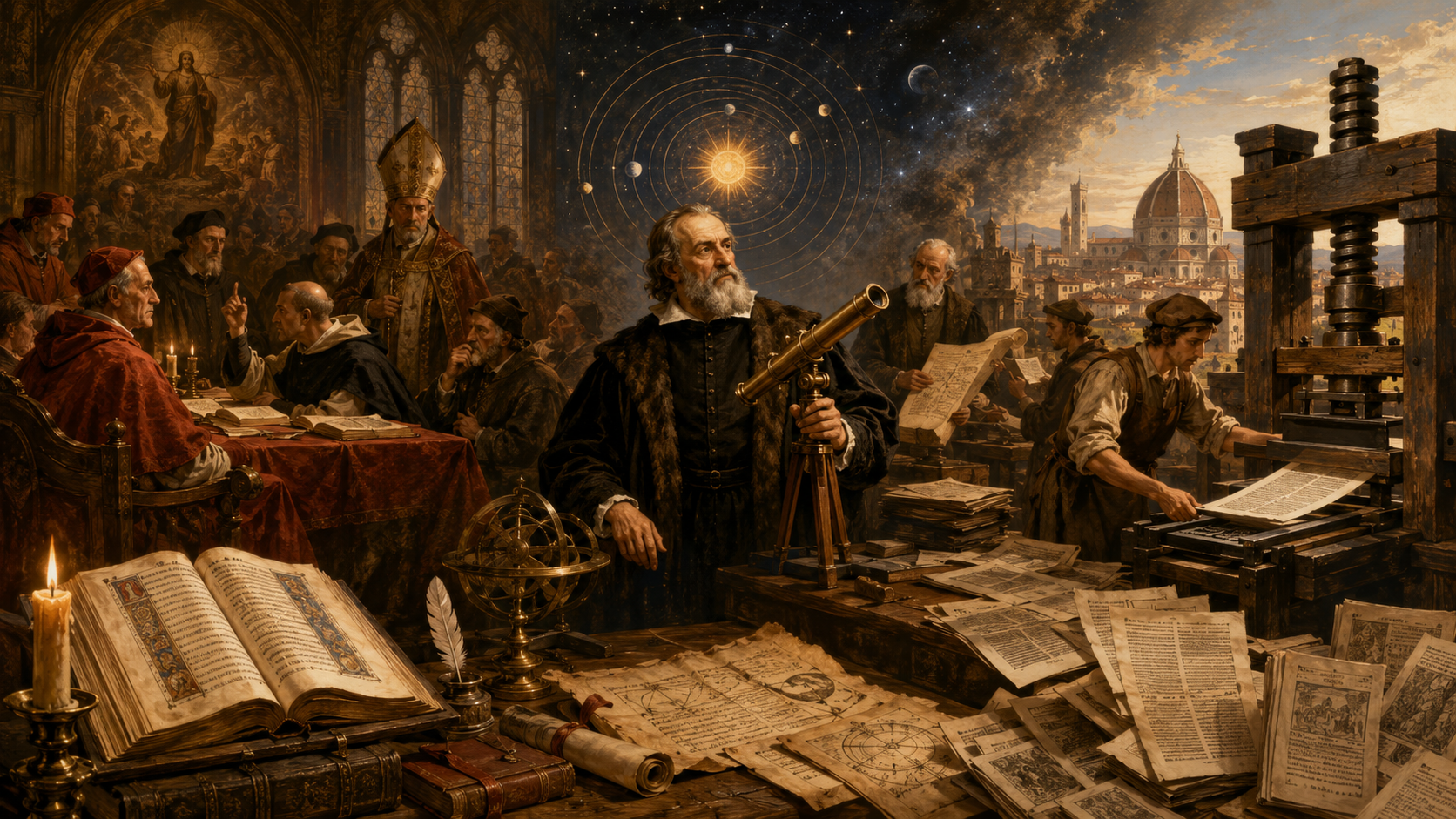
Galileo’s support of heliocentrism led to his 1633 trial before the Roman Inquisition. He was judged vehemently suspected of heresy and sentenced to imprisonment, later commuted to house arrest. Giordano Bruno, who taught an infinite universe and many worlds, was executed for heresy in 1600, though historians debate how much his cosmology, rather than his broader theological views, contributed to his condemnation.
Theological and Philosophical Concepts:
Early Christians fiercely debated how to describe the relationship between the Father and the Son. At Nicaea in 325, the council condemned Arianism, which taught that Christ was a created being rather than equal in divine nature with the Father.
Translation and Literacy:
Bible translation into vernacular languages was sometimes treated as dangerous, especially when associated with reform movements or unauthorized teaching. John Wycliffe’s 14th-century English Bible tradition was condemned, and William Tyndale was executed in 1536 after translating the New Testament and parts of the Old Testament into English.
Reform Movements:
Many ideas that later became mainstream Protestant doctrine were initially branded as heretical, including justification by faith alone, the priesthood of all believers, and challenges to papal authority.
These examples illustrate how institutions may resist changes they believe threaten truth, order, authority, or deeply held worldviews, even when later generations judge some of those changes differently.
The printing press wasn’t universally condemned as “evil,” but it did face significant suspicion and resistance from various authorities, including church officials, for several reasons:
Church Concerns:
Many clergy worried about losing control over religious texts and doctrine. The ability to mass-produce books meant that “heretical” or unauthorized religious writings could spread rapidly. Some church authorities feared that widespread access to religious texts would lead to misinterpretation and undermine clerical authority. The printing of indulgences also became controversial, particularly as it enabled the mass production that reformers like Martin Luther criticized.
Secular Authority Fears:
Political rulers were concerned about the spread of seditious materials and ideas that could challenge their authority. The printing press made it much harder to control the flow of information, which worried those in power.
Economic Disruption:
Scribes and manuscript copyists saw their livelihoods threatened by this new technology. Some guilds and established book producers initially resisted the innovation.
Quality Concerns:
Some scholars and clergy argued that printed books were inferior to hand-copied manuscripts, both in terms of accuracy and spiritual value. There was a belief that the careful, meditative process of hand-copying was itself spiritually beneficial. However, many embraced it.
The lesson is not simply that religious institutions oppose progress. The history is more complicated than that. New ideas can spread fear as well as hope, and authorities often respond according to what they believe is at stake: truth, order, influence, or public trust. The printing press is a good example. It was not simply rejected; it was embraced, regulated, feared, and used by the very institutions it disrupted.
 Every Heart and Tongue