The Old Testament book of Nehemiah tells the story of God’s faithfulness to His people as they worked to rebuild the walls of Jerusalem. It is a story of prayer, courage, opposition, and renewed commitment to God. It also offers practical lessons about leadership and managing difficult work.
As someone who has spent years working in project management and business analysis, I find Nehemiah especially interesting. I recognize many practices in his actions that still help us plan and complete projects today. Yet we must be careful not to force modern project management terminology onto Scripture. Nehemiah did not set out to write a management handbook. His account first points us to the Lord, who guided and sustained His people.
Understanding the Need
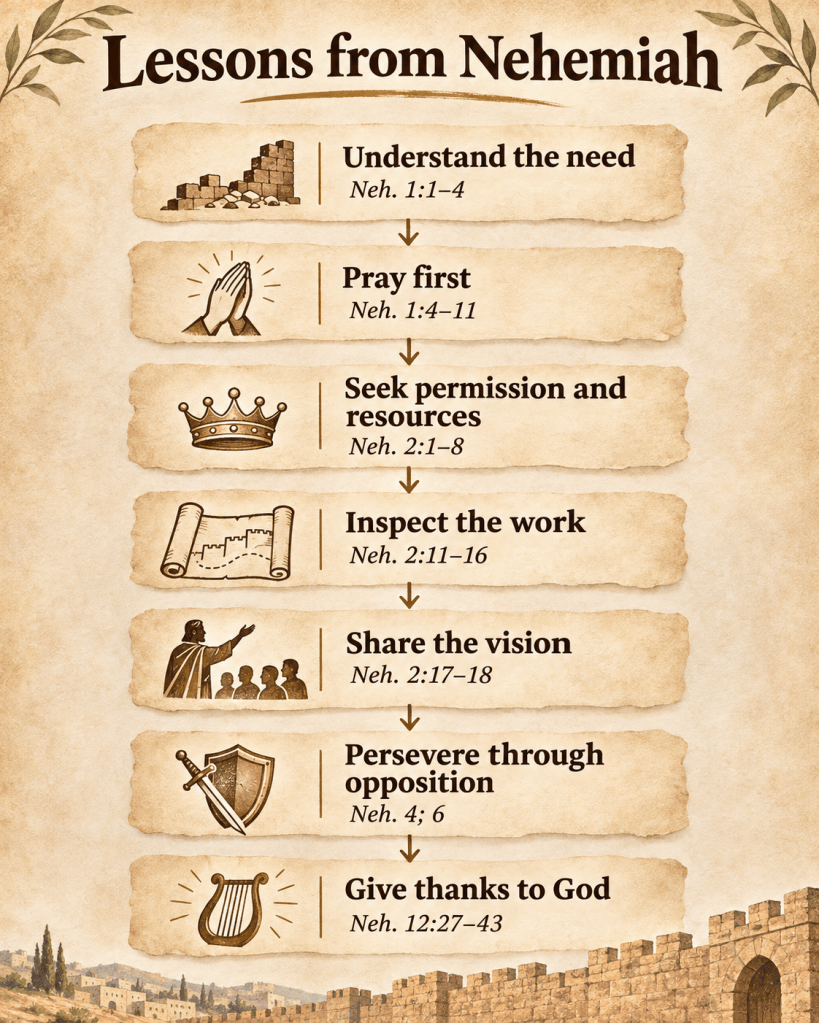
After the exile in Babylon, some Jewish people returned to their homeland. The temple had been rebuilt, but Jerusalem’s walls remained broken and its gates burned. When Hanani and others brought Nehemiah news of the people’s trouble and shame, he understood the seriousness of their situation (Nehemiah 1:1–3).
In project management, we often begin with a problem or need. Before choosing a solution, we should understand what is wrong, whom it affects, and why action matters. Nehemiah listened carefully to the report. But his first response was not to draw up a schedule. He mourned, fasted, confessed sin, and prayed to the God of heaven (Nehemiah 1:4–11).
That order matters. Nehemiah’s concern for Jerusalem grew from love for God and His people, not merely from a desire to complete a construction project.
Seeking Authority and Resources
Nehemiah served as cupbearer to King Artaxerxes. When the king noticed his sadness and asked what he wanted, Nehemiah prayed and then requested permission to go to Jerusalem to rebuild the city (Nehemiah 2:1–5). The king asked how long he would be gone, and Nehemiah gave him a time. Nehemiah also requested letters for safe passage and timber for the work (Nehemiah 2:6–8).
These details remind me of a project charter: agreement on the purpose of the work, permission to proceed, and access to the resources needed. Scripture does not call the letters a charter, but the comparison is useful. Nehemiah did not assume that good intentions were enough. He sought the authorization and practical support needed to carry out the work.
He also recognized the ultimate source of that help. Nehemiah wrote that the king granted his requests because God’s good hand was upon him (Nehemiah 2:8).
Examining the Work Before Beginning
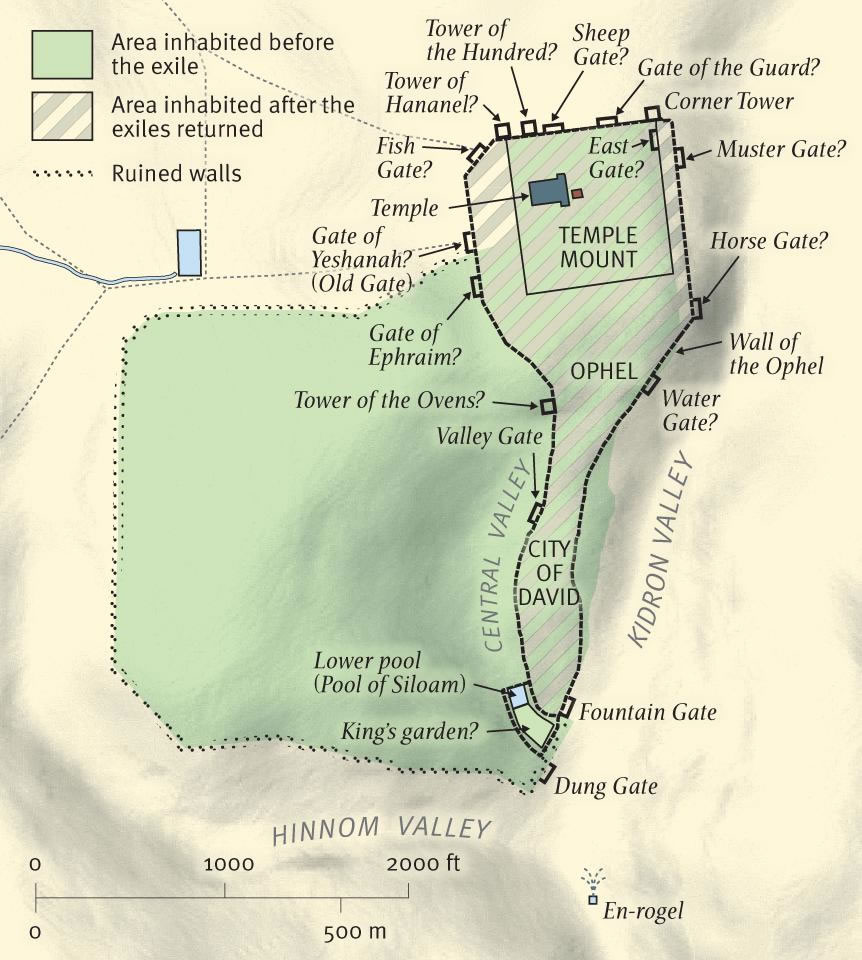
After arriving in Jerusalem, Nehemiah did not immediately gather a crowd and start rebuilding. He went out at night with a few men to inspect the damaged walls and gates (Nehemiah 2:11–16). He saw the situation for himself before presenting the work to the people.

This is a valuable lesson in defining the scope of a project. Reports can alert us to a need, but careful observation helps us understand the actual conditions. Nehemiah’s inspection is a biblical example of gathering firsthand information before asking others to act.
Sharing the Vision
Nehemiah then spoke to the people about Jerusalem’s condition and urged them to rebuild. He told them how God had helped him and how the king had responded. The people agreed to begin the work (Nehemiah 2:17–18).
Successful projects require more than a leader’s private plan. People need to understand the purpose of their work and be willing to take part in it. Nehemiah explained both the need and the reason for hope. The task was shared, not carried by one person alone.
Dividing the Work
Nehemiah 3 describes the rebuilding of specific gates and sections of wall by priests, families, craftsmen, and others. Different groups took responsibility for different portions of the work. Some repaired sections near their own homes.
Today we might describe this as breaking a large project into manageable pieces and assigning responsibility. Each section mattered because each contributed to the completed wall. The account also reminds us that effective work depends on people with different backgrounds working toward a common purpose.
Responding to Opposition and Risk
The rebuilding did not proceed without opposition. Sanballat, Tobiah, and others mocked the workers, threatened them, and tried to disrupt the work (Nehemiah 4; 6). The people became weary, and the danger was real.
Nehemiah responded with prayer and practical precautions. Guards were posted, workers were organized for defense, and some carried weapons while they worked. Nehemiah encouraged the people to remember the Lord and to protect their families (Nehemiah 4:9, 13–23).
Modern project managers call this risk management: identifying threats and adjusting plans to meet them. Nehemiah’s response teaches something more. Planning and prayer were not competing activities. The people trusted God while taking responsible action.
Nehemiah also refused distractions meant to pull him away from the work. When opponents repeatedly invited him to a meeting, he would not abandon his responsibilities (Nehemiah 6:1–4). Good leaders must sometimes say no to remain faithful to the task entrusted to them.
Completing the Work—and Remembering Its Purpose
The wall was completed in fifty-two days (Nehemiah 6:15). This was a remarkable accomplishment, but Nehemiah did not present it as proof of his personal greatness. Even Israel’s enemies recognized that the work had been accomplished with God’s help (Nehemiah 6:16).
The story does not end with the finished wall. Nehemiah 8 describes the public reading of God’s Law, and later chapters tell of confession, covenant renewal, dedication, and reform. The wall mattered, but the deeper concern was a people living faithfully before God. At the dedication, the people celebrated with thanksgiving and joy (Nehemiah 12:27–43).
This is an important reminder for anyone responsible for a project. Finishing the work is not the same as fulfilling its larger purpose. We need to ask whether the work has genuinely served the people and mission for which it was undertaken.
The Greatest Lesson
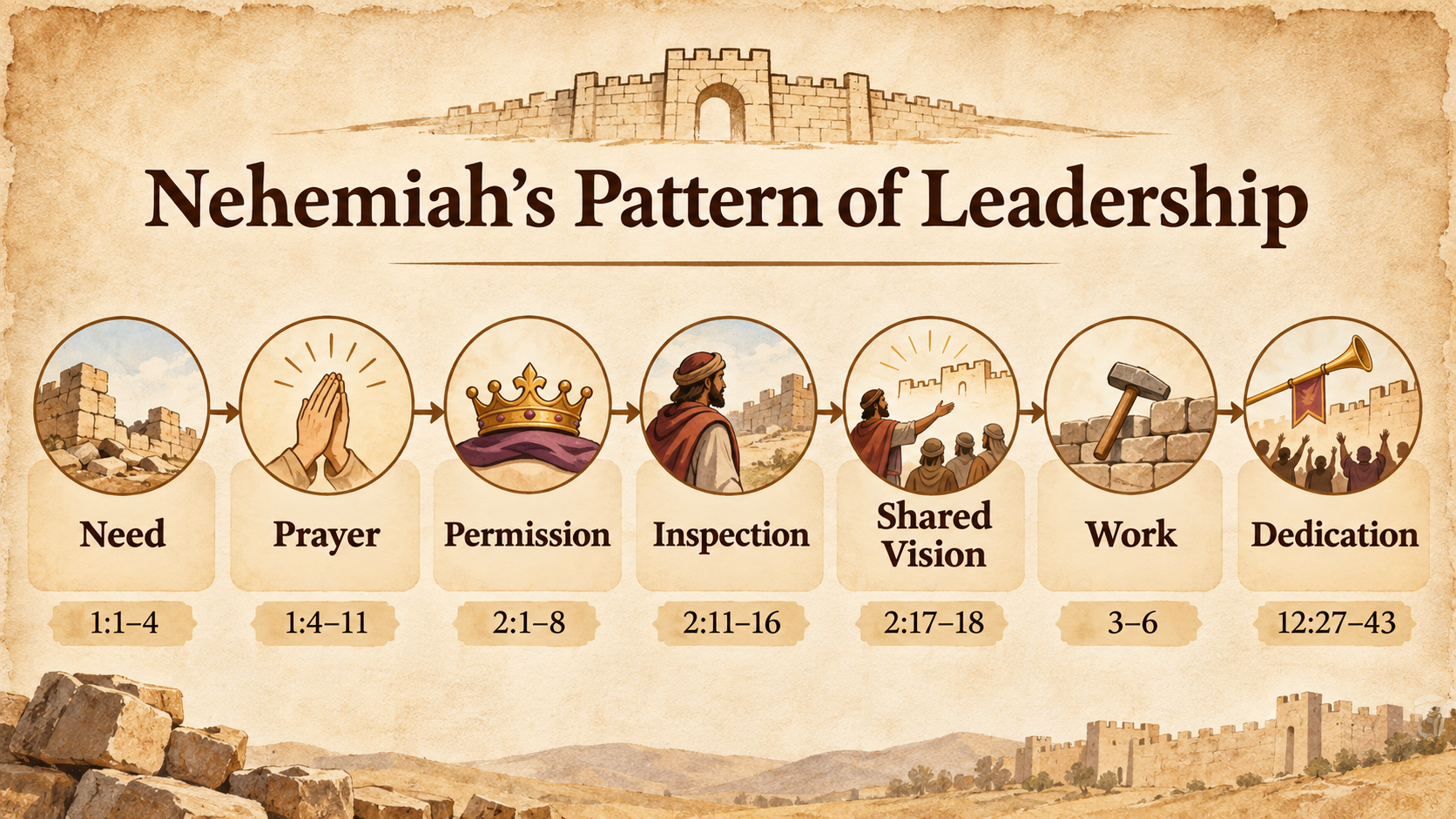
I see several project management practices reflected in Nehemiah’s account: understanding a problem, seeking approval and resources, assessing conditions, sharing a vision, dividing the work, responding to risks, and recognizing completion. These are useful comparisons, but they are not the book’s central message.
Nehemiah consistently turned to God. He prayed when he first heard the troubling news. He prayed before speaking to the king. He prayed when enemies threatened the work. And when the wall was finished, the people gave thanks to the Lord.
We can plan carefully, communicate clearly, and work diligently. We should do all of those things. But Nehemiah teaches us not to confuse our plans with God’s purposes or our abilities with His grace. Whatever work God places before us, we should approach it with prayer, humility, faithful effort, and gratitude.
That may be the most important project management lesson we can learn from Nehemiah.

